How to Prevent Overspray During Spray Foam Installation
The cheapest overspray cleanup is the one that never happens. Here's what actually works to keep SPF where it belongs on the next job.
Why We're Writing a Prevention Guide on a Removal Site
Most of this site is written for property owners dealing with overspray after the fact. This post is different — it's for the applicators and crews on the other side of that job, because every overspray removal call we get traces back to a job where prevention would have been cheaper and faster than the cleanup that followed, including any professional detailing bill for a car that got caught in the drift.
None of this is exotic. It's the same handful of practices that separate a clean job from a callback, and most of it costs setup time, not equipment.
Know Your Wind Threshold and Actually Respect It
SPF overspray happens because atomized liquid foam gets carried by wind before it lands and expands. That's the entire mechanism — no wind, no drift, no overspray on a car three houses down. Most experienced crews treat sustained wind or gusts above roughly 15-20 mph as a hard stop for outdoor spraying, not a judgment call to push through on a tight schedule.
Morning and early-afternoon calm periods are usually the most reliable window on a given day. If the forecast shows the wind picking up mid-job, it's worth sequencing the work to finish the most drift-exposed sections — anything near a property line, parked vehicles, or open windows — before conditions change, rather than saving them for last.
- Sustained wind or gusts above ~15-20 mph: stop outdoor spraying
- Morning/early-afternoon calm windows are usually the most reliable
- Sequence drift-exposed sections earlier in the job, not last
Masking Is Cheap Protection
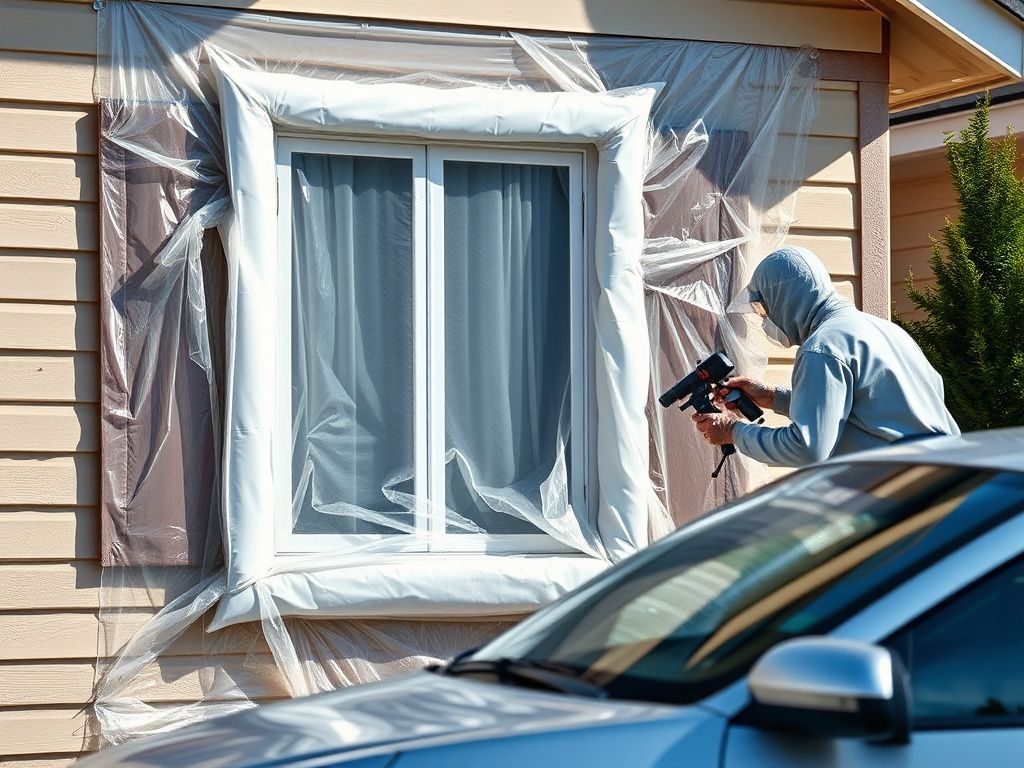
Specialty spray-foam masking tape, plastic sheeting, and reusable foam shields on windows, vehicles, and any surface within realistic drift range cost a fraction of what a single automotive detailing callback runs. Move what can be moved — vehicles, patio furniture, planters — out of the drift zone entirely before spraying starts, rather than masking it in place.
For anything that can't be moved, physical barriers do the rest of the work: a portable spray tent or windscreen (a PVC frame with fabric like burlap or reinforced polyester) around the immediate work zone, and paper or plastic shielding at roof edges and other drift-prone transition points, meaningfully cuts down how far stray material actually travels.
- Move vehicles and movable items out of drift range before spraying, don't just mask them in place
- Masking tape, plastic sheeting, or reusable shields on anything that can't be moved
- Portable spray tents or windscreens around the active work zone
- Paper/plastic shielding at roof edges and other drift-prone transitions
Gun Settings and Spray Distance Matter More Than People Assume
A tighter, better-calibrated fan pattern and correct spray distance reduce the fine mist that's most prone to drifting in the first place — a poorly tuned gun throwing a wide, misty pattern is a bigger overspray risk than a well-calibrated one, independent of wind conditions entirely. Regular equipment checks and pattern tests before starting a job, especially a job near property lines or parked vehicles, are worth the few minutes they take.
Communicate Before You Spray, Not After a Complaint
Advance notice to occupants and neighboring property owners — a simple heads-up that spraying is happening and asking them to move vehicles or cover anything sensitive — heads off a lot of overspray incidents before they happen, and it goes a long way even when a small amount of drift does occur despite every precaution. Every job benefits from a quick overspray plan: what's nearby, what needs to move, what needs masking, and what the wind forecast looks like for the work window.
When overspray does happen despite precautions — and on some jobs, especially tight urban lots, it will — responding quickly and covering professional cleanup costs without an argument is what keeps a minor incident from becoming a reputation problem.
Frequently asked questions
Most experienced crews treat sustained wind or gusts above roughly 15-20 mph as a hard stop for outdoor application, not a judgment call to push through.
Yes — a poorly tuned gun throwing a wide, misty spray pattern creates more fine, drift-prone material than a well-calibrated one, independent of wind conditions. Pattern checks before a job near property lines or vehicles are worth the time.
Responsible contractors generally cover professional cleanup and detailing costs for overspray their work caused, even when reasonable precautions were followed. Responding quickly and without pushback protects the relationship and the reputation far more than it costs.
Ready for a free quote?
Tell us about your overspray situation and we'll build a clear quote for professional removal.