Spray Foam Overspray Removal from Roofing
Roofing overspray shows up two ways: on a roof that's the target of an SPF roofing application itself, where foam drifts onto areas that weren't meant to be sprayed — flashing, vent stacks, skylights, adjacent membrane sections — or on a neighboring roof entirely, when wind carries droplets from one building to the next. Either way, the removal approach depends heavily on what's underneath the overspray, since roofing membranes and shingles have very different tolerances for scraping, heat, and solvents.
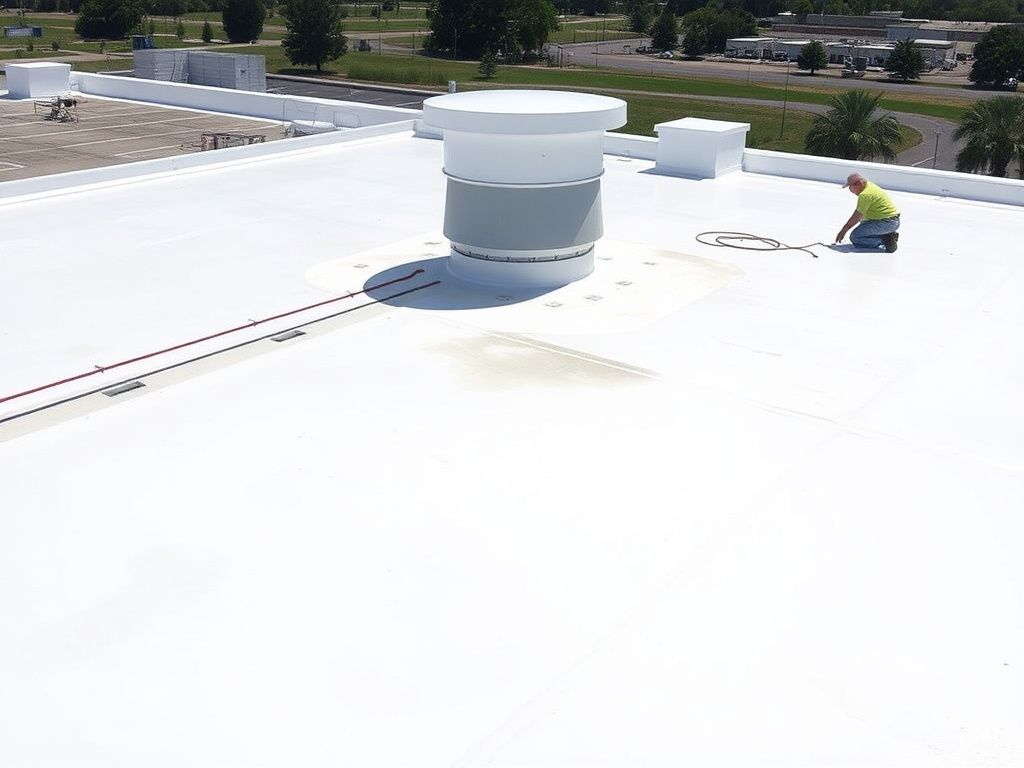
Membrane Roofing (TPO, PVC, EPDM)
Single-ply membrane roofing is smooth, tough, and generally more solvent- and abrasion-tolerant than shingles, but it's also a waterproofing layer, which means punctures are a real concern with any metal scraper. A plastic scraper, used at a shallow angle, is the right first tool, followed by a membrane-safe solvent (check compatibility with the specific membrane type — TPO, PVC, and EPDM don't all tolerate the same solvents) applied to a cloth for residual film.
Seams and flashing details deserve extra caution — these are the roof's most vulnerable waterproofing points, and aggressive scraping near a seam risks compromising it. When overspray lands directly on or very near a seam, that's a situation worth a professional look rather than DIY scraping, since a damaged seam is a leak risk that costs far more to fix than the overspray itself.
- Plastic scraper only — metal tools risk puncturing the waterproofing membrane
- Confirm solvent compatibility with your specific membrane type before applying
- Extra caution near seams and flashing — these are the roof's most leak-vulnerable points
Asphalt Shingles
Shingles are more textured than membrane roofing, with a granule surface that behaves a bit like a rougher version of the stucco problem — foam can grip into the granules, and aggressive scraping risks dislodging granules along with the foam, which shortens the shingle's UV-protective lifespan in that spot.
For shingle overspray, gentle heat (low setting, kept moving, never concentrated in one spot) to soften the foam before a light scraping pass tends to work better than solvents, which can also affect asphalt shingle coatings. Isolated droplets on a small area are a reasonable DIY task from a stable ladder position; anything requiring you to walk the roof surface itself is a job for a professional roofer equipped and trained to be up there.
- Gentle, moving heat to soften foam before a light scrape — avoid concentrated heat in one spot
- Granule loss during aggressive scraping shortens the shingle's remaining lifespan in that area
- Roof-walking for removal is a professional job, not a ladder-and-reach DIY task
Vent Stacks, Flashing & Skylights
Metal vent stacks and flashing are more forgiving of scraping than the roofing material itself, but they're often coated or painted, and aggressive removal can strip that coating and accelerate corrosion. Skylight glass or plastic domes should be treated like the window/glass guidance on this site — plastic tools, lubrication, no aggressive solvents on plastic (acrylic) skylight domes, which can craze or cloud under strong solvents the way glass doesn't.
Why This Isn't Always a DIY Job
Roof work carries a real fall risk that none of the other surfaces on this site do, and that alone is a reason to think carefully before climbing up for anything beyond what's reachable from a stable ladder at the edge. Combine that with the membrane-puncture and granule-loss risks above, and roofing overspray — especially anything beyond a handful of droplets near the edge — is a surface where professional removal is worth it for safety reasons as much as surface-protection ones.
Roofing (Membrane & Shingles) overspray questions, answered
The foam itself doesn't damage the membrane, but improper removal can — metal tools can puncture single-ply membranes, and incompatible solvents can affect the material. Removal near seams and flashing deserves particular caution.
It can if scraping is too aggressive. Softening the foam with gentle, moving heat before a light scraping pass reduces the risk of dislodging granules compared to scraping cured foam directly off a dry shingle.
Isolated droplets reachable from a stable ladder at the roof edge are a reasonable DIY task. Anything requiring you to walk the roof surface, or overspray near seams, flashing, or skylights, is safer left to a professional, both for the roof's sake and for fall-safety reasons.
Wind carrying atomized liquid foam off the intended spray area — onto vent stacks, flashing, adjacent membrane sections, skylights, or a neighboring roof entirely. It's the same drift mechanism that causes overspray on any other surface, just occurring on the job site itself.
Get a Free Roofing Overspray Quote
Tell us the roofing material and where the overspray landed, and we'll walk you through the safest removal path. Call 844-967-5247 or email josh@contractorschoiceagency.com.