Why overspray happens, and how it's prevented
Whether you're a property owner trying to understand how this happened, or a contractor trying to avoid the next callback, the mechanism is the same: liquid spray foam gets carried by wind or slips past a coverage gap before it lands and cures. This page covers both sides — the real causes, and the real prevention practices that cut overspray incidents down.
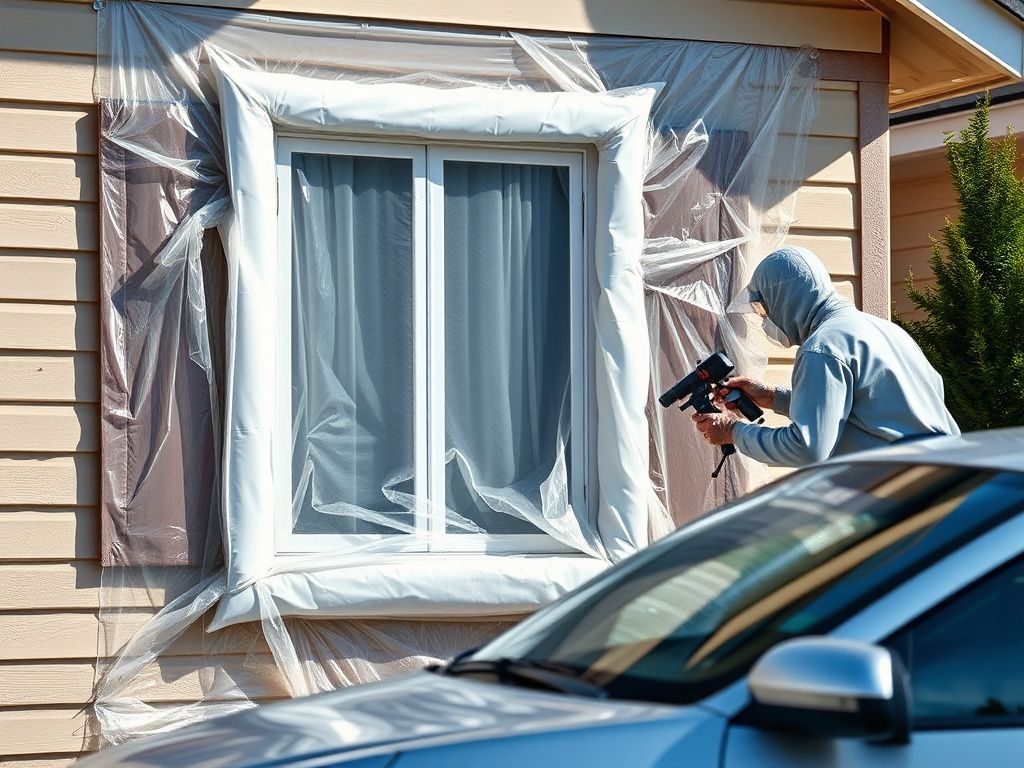
The real mechanics behind overspray
Wind carries the liquid before it cures
SPF leaves the spray gun as a liquid mix that hasn't expanded or cured yet. Even a moderate breeze can carry fine, atomized droplets well past the intended target before they land and expand — the single biggest driver of overspray on any job.
Gaps in masking and coverage
Windows, vehicles, siding sections, and landscaping that aren't fully covered — or covered but with gaps at edges and corners — are the most common overspray targets, even on jobs where masking was attempted.
Spray gun pattern and distance
A poorly calibrated gun throwing a wide, misty fan pattern, or spraying from too far off the target surface, creates more fine, drift-prone material regardless of wind conditions.
Applicator technique and rushed jobs
Experience matters. Crews working too fast, without a wind check, or without a clear coverage plan for what's nearby are more likely to leave gaps that turn into overspray incidents.
Prevention practices that actually cut overspray
Prevention costs setup time, not equipment, and it's consistently cheaper than the cleanup — including any professional detailing bill for a car caught in the drift. A few practices come up on every job that avoids an overspray callback.
Set and respect a wind threshold
Treat sustained wind or gusts above roughly 15-20 mph as a hard stop for outdoor spraying, not a judgment call.
Move what can be moved
Vehicles, furniture, and planters out of realistic drift range beats masking them in place every time.
Mask and shield what can't
Specialty foam masking tape, plastic sheeting, reusable shields, and portable windscreens or spray tents around the active zone.
Calibrate the gun before starting
A tight, well-tuned fan pattern throws far less fine, drift-prone mist than a wide or poorly calibrated one.
Give advance notice
A heads-up to occupants and neighboring property owners lets them move vehicles and cover anything sensitive before spraying starts.
Have a same-day response plan
Precautions reduce risk but don't eliminate it — knowing how you'll respond if overspray happens anyway keeps a minor incident from becoming a bigger problem.
If a spray foam job is happening near you
If you know a spray foam job — yours or a neighbor's — is happening nearby, a few minutes of prep can prevent an overspray problem entirely. Move vehicles out of the immediate area rather than leaving them parked close to the work. Close windows and, where practical, cover any patio furniture, grills, or landscaping features directly adjacent to the work zone. If it's your own contractor, ask what their overspray plan looks like for the day — a contractor with a clear answer has usually done this before.
If overspray happens anyway despite reasonable precautions, that's not a sign something went badly wrong — wind is unpredictable, and even careful crews occasionally get caught by a gust. What matters most at that point is responding quickly, since overspray only gets harder to remove the longer it sits.
Causes & prevention questions
Most experienced crews treat sustained wind or gusts above roughly 15-20 mph as a hard stop, not a judgment call to push through. Morning and early-afternoon calm periods tend to be the most reliable windows.
Ask what their overspray plan is for the day — how they're monitoring wind, what's being masked or moved, and who covers cleanup costs if overspray does happen despite precautions. A contractor with a clear answer has likely done this before.
Yes, if it's parked within realistic drift range — generally anywhere on the same property or directly adjacent to the work area. Moving a vehicle entirely out of range is more reliable than masking it in place.
Yes, especially on tight lots or unpredictable wind days. Precautions dramatically reduce the odds and severity, but they don't eliminate the risk entirely, which is why a same-day response plan matters as much as the prevention plan itself.
Already dealing with overspray?
Prevention is great going forward — if it's already happened, we'll help you get it off safely. Call 844-967-5247 or request a free quote.