Spray Foam Overspray Removal from Concrete & Pavers
Driveways, patios, walkways, and paver surfaces are common overspray landing zones simply because they're horizontal and directly below or adjacent to most spray foam work. The good news is that concrete and most paver materials are tough, non-porous or low-porosity, and tolerant of both mechanical scraping and pressure washing — this is one of the more forgiving surfaces on our list, with one specific exception worth knowing about.
Scraping Cured Foam First
For any foam thick enough to have real texture — not just a thin film — start with mechanical removal before reaching for a pressure washer or solvent. A stiff plastic or metal floor scraper (concrete tolerates metal tools far better than paint, glass, or vinyl do) worked at a low angle will lift the bulk of cured foam quickly. Concrete's rough surface actually helps here, giving the scraper something to catch under the foam's edge.
Save the pressure washer and solvent for the residual film and staining left behind after the bulk of the material is scraped away — trying to pressure-wash away a thick, still-intact foam mass is usually a slow, inefficient use of a tool that's much better suited to the cleanup pass.
- Metal or stiff plastic floor scraper for the bulk of cured foam
- Concrete's texture actually helps the scraper catch under the foam's edge
- Save pressure washing for the residual film, not the initial bulk removal
Pressure Washing
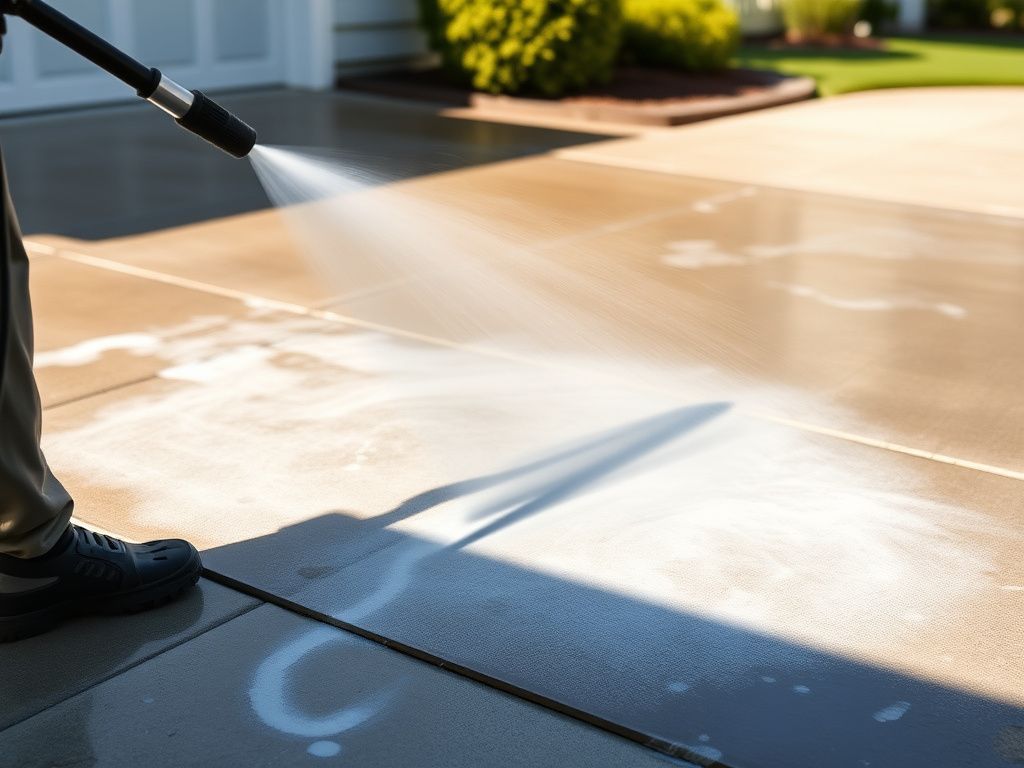
A gas-powered pressure washer in the 3,000 PSI range, with a narrow-to-moderate fan tip, is genuinely effective on plain poured concrete for clearing residual foam film and light staining after scraping. Work in overlapping passes and keep the nozzle moving rather than holding it in one spot, which can etch or discolor the concrete surface itself at high pressure and close range.
For any remaining discoloration after scraping and washing, a scrub with a mild solvent or a dedicated concrete cleaner, followed by another rinse, typically finishes the job. Concrete's low porosity means staining is usually surface-level rather than soaked in, unlike a truly porous material.
- 3,000 PSI range with overlapping passes, keeping the nozzle moving
- Holding the nozzle in one spot at close range can etch the concrete surface
- A mild solvent or concrete cleaner handles residual staining after washing
The One Real Caveat: Sand-Set Pavers
Solid poured concrete can take a strong pressure wash without much concern. Pavers set in sand joints (rather than mortared) are a different story — the same water pressure that cleans the paver surface can blow the joint sand right out from between the pavers, which is a bigger repair headache than the overspray was. If you have sand-set pavers, either dial the pressure down significantly and keep the nozzle at a wider angle away from the joints, or lean more heavily on scraping and hand-cleaning around joint lines and save higher pressure for the flat paver faces only.
- Sand-set paver joints are vulnerable to high-pressure water erosion
- Reduce pressure or angle away from joints, or hand-clean near joint lines
- Mortared pavers and poured concrete don't carry this risk
When to Call a Professional
Most concrete and paver overspray is a genuinely reasonable DIY project — this is one of the more forgiving surfaces on this site. The situations worth a professional call are large-area coverage that would take an impractical amount of time with a consumer-grade pressure washer, decorative stamped or stained concrete where the wrong solvent could affect the finish, or any sand-set paver situation where you're not confident dialing in a safe pressure setting.
Concrete & Pavers overspray questions, answered
Scrape off the bulk of the cured foam with a stiff plastic or metal scraper, then pressure wash the remaining film and any staining. Trying to pressure-wash thick, intact foam first is usually slower than scraping it off directly.
Poured concrete generally tolerates a strong pressure wash well. Sand-set pavers are the exception — high pressure can blow the joint sand out from between them, so it's worth reducing pressure or angling away from joint lines on that type of surface.
Usually not — concrete's relatively low porosity means most residual discoloration is surface-level and comes off with scraping, pressure washing, and a mild solvent scrub rather than being permanently soaked in.
Test any solvent in an inconspicuous spot first — stamped and stained decorative concrete finishes can be more solvent-sensitive than plain gray concrete. When in doubt, a professional assessment is worth it before applying anything broadly.
Get a Free Concrete & Paver Overspray Quote
Large area affected, or working around sand-set pavers or a decorative concrete finish? Call 844-967-5247 or email josh@contractorschoiceagency.com for a quote.