Spray Foam Overspray Removal from Automotive Paint
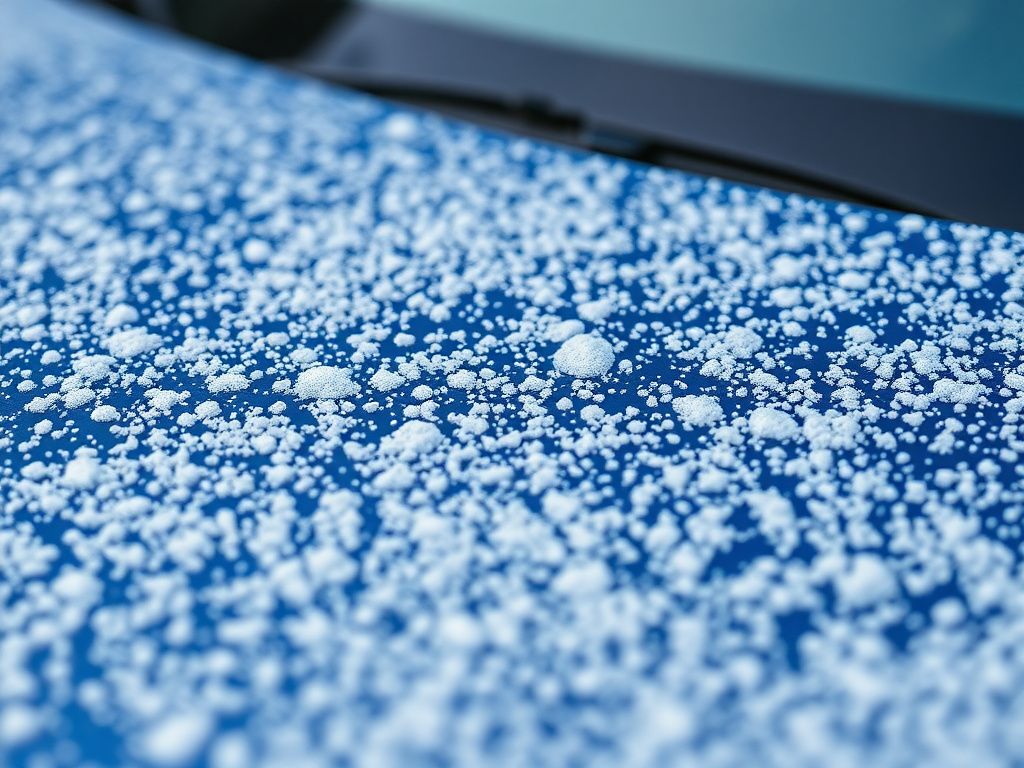
A vehicle parked too close to a spray foam job — even one across the driveway or on the other side of a fence line — can end up speckled with dozens or hundreds of small, hardened foam droplets in a matter of minutes. Automotive paint is the single riskiest surface for overspray, not because the foam itself is uniquely aggressive, but because the surface underneath it — a thin, glossy clear coat — is easy to damage with the wrong scraper, the wrong solvent, or too much pressure. This page covers what actually happens to a vehicle's finish under overspray, which removal methods are genuinely safe, which ones create a second, bigger problem, and why this is the one surface on our list where we'd tell you to think twice before doing it yourself.
Why Automotive Paint Is the Highest-Risk Overspray Surface
Spray polyurethane foam leaves the gun as a liquid, and while it's airborne it can drift a surprising distance on a breeze before it lands and expands into the familiar rigid foam. On a car, it lands as small individual droplets across the hood, roof, windshield, and any horizontal or wind-facing panel, then cures in place within minutes — bonded to whatever surface it hit.
The foam itself isn't what damages a car's finish. The clear coat is a thin, transparent polymer layer applied over the base color coat specifically to protect it from UV, oxidation, and minor abrasion — and it's only a few microns thick. Anything that abrades, dissolves, or heats that layer unevenly can leave it dull, swirled, or in the worst case burned through to the color coat underneath, which is a repaint, not a cleanup.
That's the entire risk calculus on this page: the foam comes off one way or another, but the clear coat only survives the process if the method respects how thin and chemically sensitive it is.
- Overspray cures within minutes on a vehicle exposed to a nearby spray job
- The clear coat, not the foam, is what's actually at risk during removal
- Aggressive scraping, hot water, and strong solvents are the most common causes of DIY damage
What NOT to Do — Methods That Commonly Damage Clear Coat
Most clear coat damage we see on overspray jobs didn't come from the foam — it came from a well-meaning first attempt to get it off fast. A few methods come up again and again as the cause of a second, more expensive problem.
Metal razor blades, box cutters, and putty knives can bite into clear coat the instant the angle is wrong or the panel has any dust under the foam that acts like sandpaper. Strong solvents — acetone, lacquer thinner, brake cleaner, gasoline — dissolve foam quickly, which is exactly why they're popular DIY advice, but several of them can also soften, cloud, or strip clear coat and any factory wax or ceramic coating on contact. And working on a hot panel in direct sun causes any lubricant or solvent to flash off too fast, so the tool ends up dragging dry contaminant across the paint instead of gliding over it.
- Metal blades or box cutters — too easy to bite into clear coat at the wrong angle
- Acetone, lacquer thinner, or automotive paint strippers applied directly to painted panels
- Scrubbing on a hot, sun-exposed panel instead of working in the shade on a cool surface
- Pressure-washing with a rotating/turbo nozzle or above roughly 3,000 PSI at close range
The Safe Professional Process
The methods that actually protect a finish share one theme: lift the foam off mechanically with something softer than the clear coat, using lubrication to reduce friction, rather than trying to dissolve it in place with something strong enough to also attack the paint.
A full detail-grade removal typically starts with a straight wash to clear loose dirt and grit — skipping this step is what turns a clay bar pass into a scratch generator, because any grit under the clay gets dragged across the paint. From there, a plastic (not metal) scraper or a fine detailing clay bar, kept lubricated with a dedicated clay lubricant or plain water, is worked over each affected area in the shade on a cool panel, in small sections, with light pressure. Glass gets handled slightly differently than paint — see our dedicated window and glass overspray page for that process. Commercial overspray-removal products exist and can help soften stubborn droplets, but the safe way to use them is on a microfiber towel, not sprayed directly onto the panel, and always followed by a rinse.
Once the foam is off, the panel almost always needs a machine polish pass to restore gloss where clay or light abrasion dulled the surface, followed by a fresh coat of wax or sealant — clay bar treatment strips existing wax as part of the process, so skipping this step leaves the paint less protected than it was before the overspray ever happened.
- Wash first to remove grit before any clay bar or scraper contact
- Plastic tools only, worked in the shade on a cool panel, in small sections
- Lubricate continuously — dry contact is what causes swirl marks and scratches
- Finish with a machine polish and fresh wax or sealant, since clay bar strips existing protection
Why This Is the Surface We Recommend a Professional For
Every other surface on this site has a reasonable DIY path for a light, isolated overspray incident. Automotive paint is different, and it's worth being direct about why: the margin for error is small, the tools that work fastest are also the ones most likely to cause damage, and the cost of a mistake — a repaint or a professional paint-correction job — is usually far higher than the cost of professional overspray removal in the first place.
A professional detailer or overspray-removal specialist brings a few things a driveway DIY attempt usually can't match: correct-grade clay bars matched to the severity of the contamination, controlled indoor or shaded working conditions, a pre-work inspection that documents any pre-existing chips or scratches (so you're not left guessing what was already there), and the polishing equipment to restore gloss afterward rather than leaving a dulled, clayed panel as the final result.
If the overspray is light — a handful of droplets on one panel, caught within a day or two — a careful DIY clay bar pass in the shade is a reasonable option. If it's heavy, covers multiple panels, has been sitting for more than a few days, or is anywhere near the windshield or a painted trim edge, that's the point where calling a professional stops being overly cautious and starts being the cheaper option.
- Light, fresh, single-panel overspray: a careful DIY clay bar pass is reasonable
- Heavy, multi-panel, or older overspray: professional removal protects against a repaint-level mistake
- Ask about a pre-work damage inspection so pre-existing chips aren't attributed to the removal job
- A machine polish and fresh protection pass should be part of any quote, not an upsell
If a Contractor's Overspray Hit Your Vehicle
If the overspray came from a spray foam crew working nearby — roofing, attic, or exterior insulation work — the responsible contractor should be covering professional detailing to correct it. That's a conversation to have directly with the crew or company that caused it. Our role is the cleanup itself: assessing the vehicle, removing the foam without damaging the finish, and restoring the panel's protection afterward, whether we're working directly with a homeowner or coordinating with the contractor who caused the overspray.
Automotive Paint & Clear Coat overspray questions, answered
Not if it's removed correctly. The foam itself doesn't chemically bond into the clear coat the way a stain would — the risk is almost entirely from the removal method, not the foam sitting there. Aggressive scraping or strong solvents are what cause lasting damage, not the overspray itself.
We don't recommend it. A metal blade can bite into clear coat at the wrong angle or if there's any grit trapped under the foam. A plastic scraper or detailing clay bar, kept lubricated, is the safer choice for painted panels.
Acetone dissolves foam effectively, which is why it's common DIY advice, but it can also soften or cloud clear coat and strip wax or ceramic coatings on contact. We don't recommend applying it directly to painted panels — it's better suited to non-painted surfaces like glass.
Sooner is always easier and lower-risk. Fresh overspray is smaller and less firmly set than foam that's had days of UV and heat exposure to fully cure and adhere. It's not an emergency, but don't let it sit for weeks if you can help it.
A detailer experienced in overspray or contamination removal is usually the right call for foam droplets — it's a surface-decontamination job, not a repaint. A body shop becomes necessary only if the clear coat has already been damaged, whether by the overspray incident itself or a prior DIY removal attempt.
Get a Free Automotive Overspray Assessment
Tell us how much of the vehicle is affected and how long it's been there, and we'll walk you through the safest path to get it off without risking the clear coat. Call 844-967-5247 or email josh@contractorschoiceagency.com.