Spray Foam Overspray Removal from Decking
Decks catch a lot of overspray simply due to surface area — a wide, flat, horizontal expanse of boards sitting directly under or beside most exterior spray foam work. Whether your decking is natural wood or a wood-composite product changes the removal approach in a few meaningful ways, mostly around solvent sensitivity and how much scraping the surface can tolerate before it shows.
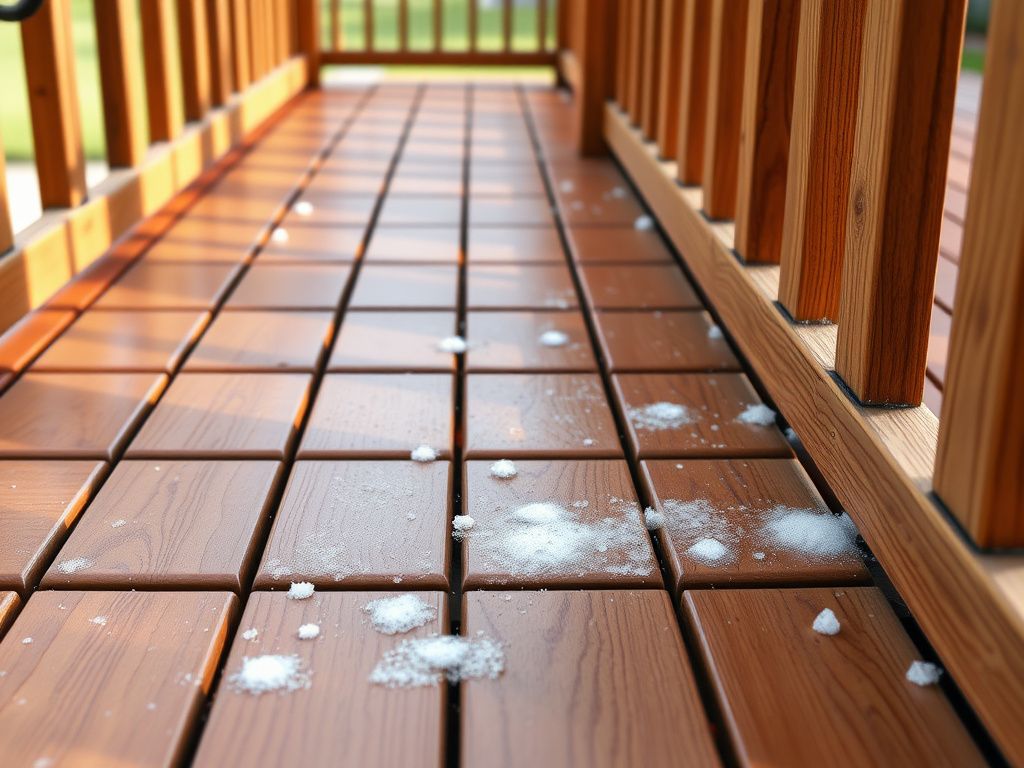
Natural Wood Decking
Wood is porous, and cured foam can grip into the grain more than it would on a sealed or composite surface, especially on decking with worn or weathered finish where the wood itself is more exposed. A plastic scraper worked with the grain, followed by a mineral-spirits or citrus-based solvent for residual film, is the standard approach — wood tolerates these solvents reasonably well, unlike vinyl.
For foam that's worked into open grain or a rough, weathered board, light sanding is a legitimate last-resort option that isn't available on most other surfaces on this site — but treat it as a last resort, since sanding changes the board's texture and finish absorption in that spot, which can be visible until the next time the deck is stained or sealed.
- Scrape with the grain, not against it
- Mineral spirits or citrus-based solvent for residual film — wood tolerates these well
- Light sanding as a last resort for foam worked into open, weathered grain
Composite & PVC Decking
Composite decking (wood-plastic blends) and solid PVC decking are less porous than natural wood, which actually makes them somewhat easier to fully clean — foam sits more on the surface than in the material. The tradeoff is that composite and PVC decking can be more solvent-sensitive than natural wood, with some products prone to discoloration or a slight sheen change from strong solvents like acetone or lacquer thinner.
The safer approach on composite is the same plastic-scraper-first method, followed by a milder solvent — isopropyl alcohol or a dedicated composite-safe cleaner rather than acetone — tested on a hidden or low-visibility board first. Composite decking manufacturers often publish cleaning guidance specific to their product line, which is worth checking before applying any solvent broadly.
- Less porous than wood, so foam sits more on the surface — generally easier to fully remove
- More solvent-sensitive than wood — test isopropyl alcohol or a composite-safe cleaner first
- Check manufacturer cleaning guidance for your specific composite product where available
Railings, Stairs & Fasteners
Overspray on metal or vinyl railings should follow the guidance for those materials elsewhere on this site rather than the decking-board approach — a metal scraper that's fine on a wood board can scratch a painted metal railing, and heat that's fine near composite decking can distort vinyl railing components.
Deck fasteners and hardware are usually the least sensitive part of the structure and can generally handle more aggressive scraping or solvent use than the surrounding decking material, but avoid soaking any exposed wood fasteners in solvent longer than necessary.
When to Call a Professional
Isolated droplets on a small deck area are a reasonable DIY task on either wood or composite decking. Larger coverage, decking with a high-end or unusual factory finish, or any situation where you're not sure which solvents your specific composite product tolerates are all good reasons to get a professional opinion before starting — composite decking especially varies a lot by manufacturer in terms of solvent tolerance.
Wood & Composite Decking overspray questions, answered
As a last resort for foam worked into open, weathered grain, yes — but treat it as a last resort. Sanding changes the wood's texture and finish absorption in that spot, which can be visible until the deck's next staining or sealing.
It can on some composite and PVC decking products, causing discoloration or a sheen change. Test any solvent on a hidden board first, or use a milder option like isopropyl alcohol, and check manufacturer cleaning guidance if available.
Natural wood tolerates gentle heat reasonably well. Composite and especially PVC decking can be more heat-sensitive than wood, similar to vinyl siding, so keep any heat gun on a low setting and keep it moving rather than holding it in one spot.
Not urgently, but sooner is easier — fresh foam is smaller and less firmly set into the wood grain or composite surface than foam that's had weeks of sun and weather exposure to fully cure and settle in.
Get a Free Decking Overspray Quote
Tell us whether your decking is wood or composite and how much coverage you're dealing with. Call 844-967-5247 or email josh@contractorschoiceagency.com.