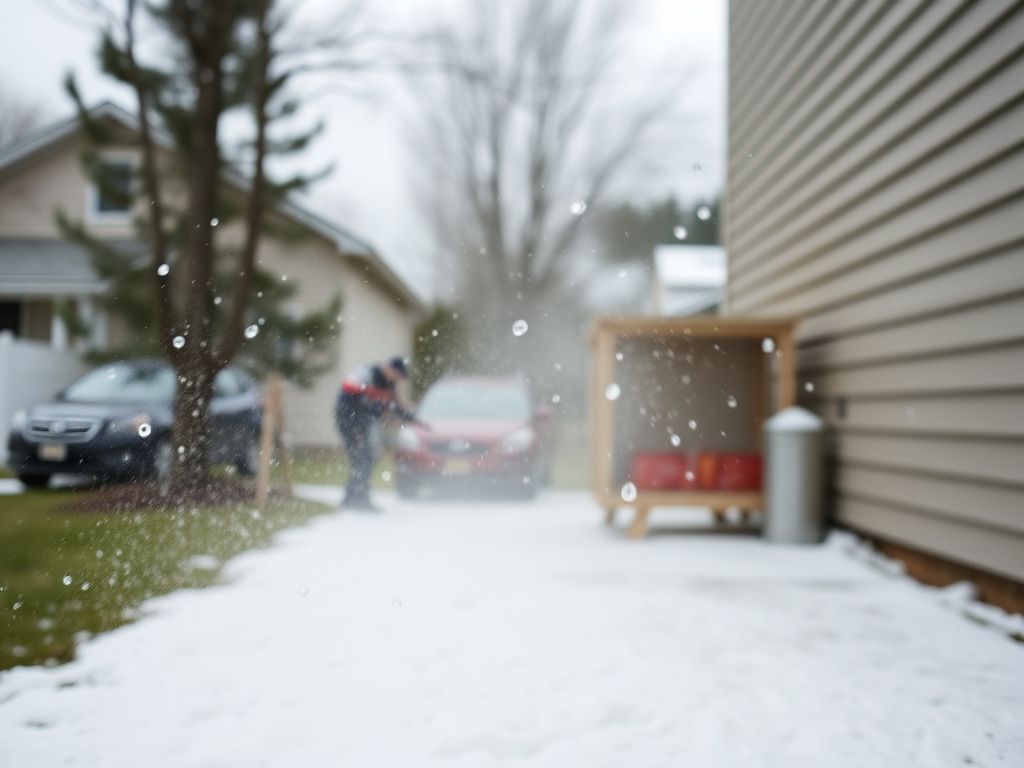
Spray foam landed where it shouldn't have?
Wind-blown spray foam overspray on your car, windows, siding, roof, concrete, decking, or landscaping — removed by professionals who know how to get it off without damaging what's underneath. It only gets harder the longer it sits.
Tell us what surface, we'll tell you what it takes
Car, window, siding, roof, concrete, deck, or landscaping — we'll build a clear, no-pressure quote for professional removal.
- Fresh or already-cured overspray
- Single spot or full-property coverage
- Coordination with the responsible contractor
Foam that cured fine — just on the wrong surface.
During a spray polyurethane foam application, liquid material leaves the gun and can be carried by wind before it lands. When it drifts past the intended surface and hits something nearby — a car, a window, a section of siding, a patch of landscaping — it cures right there, on contact, in the shape it landed in.
That's overspray: a jobsite-mess and surface-damage problem caused by wind, gaps in masking, or applicator error. The foam itself isn't defective — it's simply in the wrong place, bonded to a surface it was never supposed to touch.
We cover removal by surface, real technique guidance for each one, and how to prevent it in the first place if you're the one holding the spray gun.
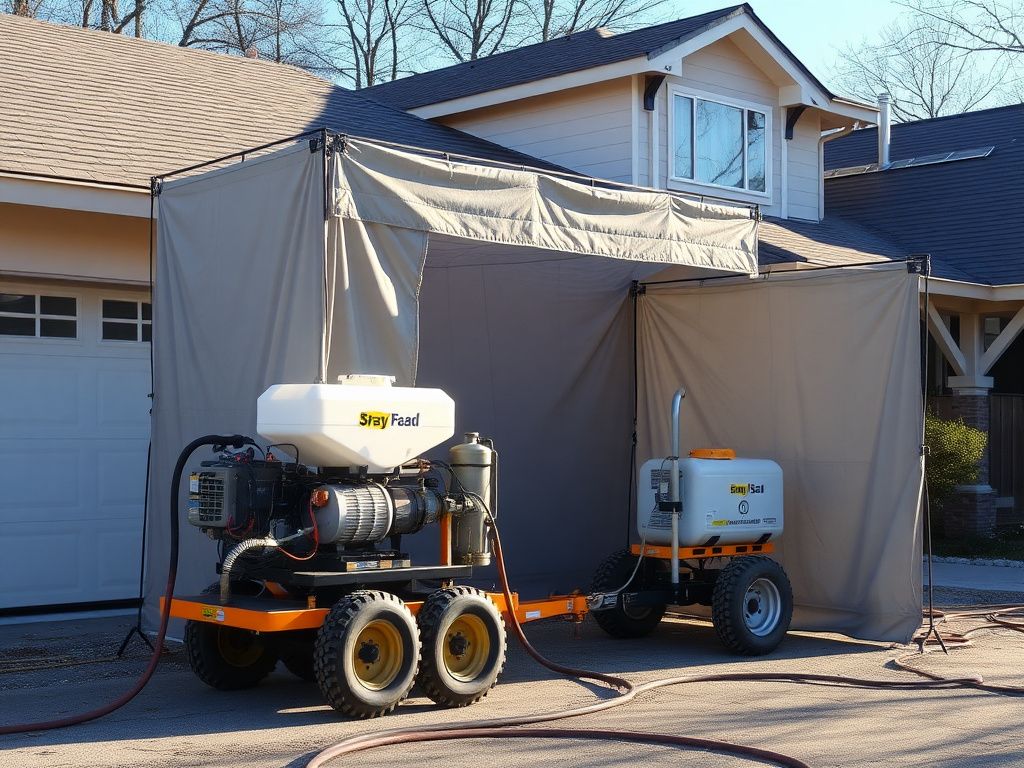
Overspray gets harder to remove the longer it sits
Fresh, uncured foam is soft and often wipes or rinses away easily. Once it fully cures — usually within about an hour — every surface needs mechanical removal, and older overspray carries a higher risk of surface damage during that removal.
Minutes to cure
Most SPF reaches a firm, rigid state within roughly 30-60 minutes of landing on a surface.
Wind-driven, not predictable
Overspray can drift onto surfaces well outside the immediate work zone on a breezy day.
Cured foam bonds tighter
Weeks of UV and heat exposure firm up the bond, raising the risk that aggressive removal damages the surface.
Automotive is highest-stakes
Clear coat is thin and easy to damage with the wrong tool — the one surface we push hardest toward professional removal.
Every surface is different
Vinyl, glass, stucco, and concrete all tolerate different tools and solvents — using the wrong one causes a second problem.
A free assessment costs nothing
We'll tell you honestly whether it's a quick DIY fix or worth professional removal before you touch anything.
From free assessment to a clean surface
Assess
We identify the surface, how much coverage, and how long it's been curing before recommending anything.
Protect
We choose the method that removes the foam without damaging the paint, glass, siding, or material underneath.
Remove
Mechanical lifting, surface-appropriate solvents, or heat softening — matched to the material, not a one-size approach.
Restore
Where needed, a polish, sealant, or finish pass so the surface isn't just clean, but protected again.
Every surface overspray tends to land on
Automotive paint, glass, siding, stucco, roofing, concrete, decking, or landscaping — click any surface to see the real removal process, what to avoid, and when to call a professional.
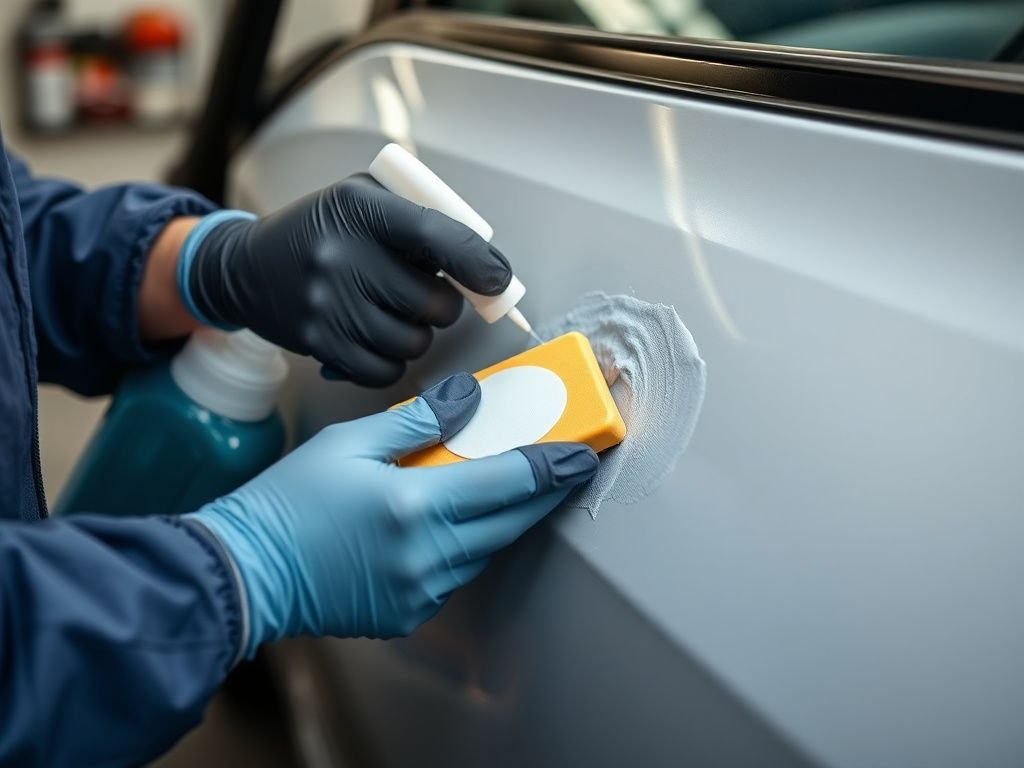 Highest-Stakes Surface
The wrong DIY tool can cost more than professional removal ever would.
Overspray doesn't damage a car's finish — the wrong removal method does. Metal blades, strong solvents, and hot-panel scrubbing are the most common causes of clear coat damage we see, which is why automotive is the one surface we consistently recommend a professional for.
- Plastic tools and clay bar, never metal blades
- Work in shade on a cool panel, never direct sun
- No acetone or strong solvents directly on paint
- Machine polish and fresh protection afterward
Overspray removal FAQs
It's spray polyurethane foam that drifted off its intended target during a spray job — usually carried by wind — and landed on a surface it shouldn't have, like a car, window, or fence, where it then cured in place. It's a jobsite-mess and surface-damage problem, not a defect in the foam itself.
No — that's a different issue entirely. Off-ratio foam is a chemistry problem where the foam itself doesn't cure correctly. Overspray is foam that cured completely normally, just on the wrong surface. We deal exclusively with overspray and surface removal, not foam chemistry problems.
Not an emergency, but sooner is meaningfully easier. Fresh, uncured foam can often be wiped or rinsed away in the first several minutes. Once it fully cures — usually within about an hour — every surface needs mechanical removal, and older, fully-weathered overspray is generally harder and higher-risk to remove than overspray caught within the first day or two.
Automotive paint and clear coat, by a wide margin. The foam itself isn't the risk — the wrong DIY tool or solvent used to remove it is what actually damages a car's finish, which is why we recommend professional removal for anything beyond light, fresh overspray on a vehicle.
Almost always, with the right method — except stucco, where the surface texture that foam grips into makes full, invisible removal unrealistic for heavier coverage, and a color-matched patch is sometimes the more practical fix.
Yes — most of the overspray we clean up traces back to a roofing, attic, or exterior spray foam job happening nearby. We work directly with property owners, and we can coordinate with the responsible contractor when that's part of the picture.
Get your free overspray removal quote
Tell us what surface is affected and how bad it is — car, windows, siding, roofing, concrete, decking, or landscaping — and we'll put together a clear, no-pressure quote for professional removal.